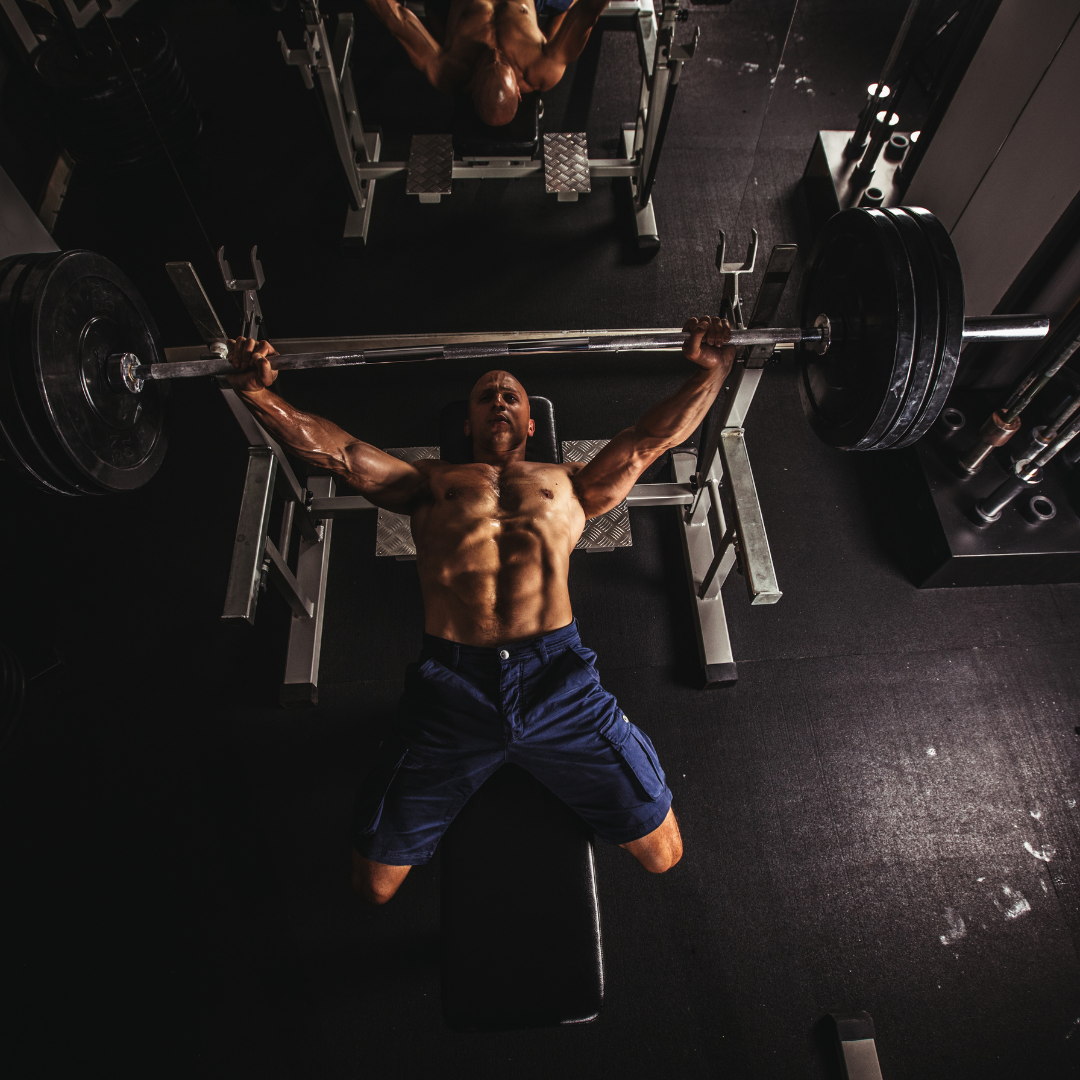
If you are a man over 40 who wants a bigger, stronger chest without fighting a barbell that feels less forgiving every year, the dumbbell bench press deserves a serious place in your program. The good news is straightforward: replacing the barbell bench press with the dumbbell bench press is a legitimate choice, not a step down. Your chest can grow bigger and stronger with either exercise. What changes is how the work feels on your shoulders, wrists, and elbows, and how much control you have over the path of the weight.
This guide covers what the dumbbell bench press actually trains, how to set it up so your shoulders stay happy, how to program it for steady progress, and how to build a complete upper body session around a pair of dumbbells and one bench.
What the Dumbbell Bench Press Actually Trains
The dumbbell bench press is a variation of the barbell bench press and an exercise used to build the muscles of the chest. The pattern is a horizontal press: you lower the weights toward your torso and drive them back up against resistance, and the chest does the majority of that work. Your triceps and front delts assist, while your upper back and grip work to keep the dumbbells stable through the whole rep.
Because each arm moves independently, there is no stronger side hiding behind a shared bar. Both sides have to contribute, which is useful for anyone dealing with a long standing strength imbalance built up over years of desk work, old injuries, or simply favoring one arm. The dumbbell version also lets many lifters reach a deeper, more controlled stretch at the bottom of the rep than they get with a bar, and that bottom position is where a lot of chest growth stimulus lives.
Dumbbell Bench Press vs Barbell Bench Press
The two lifts share a name and a movement pattern, but they ask different things of your body. A short comparison helps you decide where each one belongs in your week.
| Feature | Dumbbell Bench Press | Barbell Bench Press |
|---|---|---|
| Movement pattern | Horizontal press, each arm independent | Horizontal press, both arms locked to one bar |
| Stability demand | High, you control the path of each weight | Lower, the bar sets the path for you |
| Load potential | Limited by dumbbell size and getting them into position | Generally allows heavier loading |
| Hand and wrist position | Free to rotate and find a comfortable angle | Fixed to the bar |
| Getting into position | Requires a controlled setup from the thighs | Set up on the bench under the racked bar |
| Bailing out of a failed rep | You can set the weights down to your sides | Usually needs a spotter at heavy loads |
Neither column is automatically better. If your goal is maximum load on the bar, the barbell wins. If your goal is chest growth with more freedom for your shoulders and more demand on each side, the dumbbell version is a strong pick, and it can serve as your primary press rather than a substitute you settle for.
How to Set Up and Press the Dumbbell Bench Press
Starting position
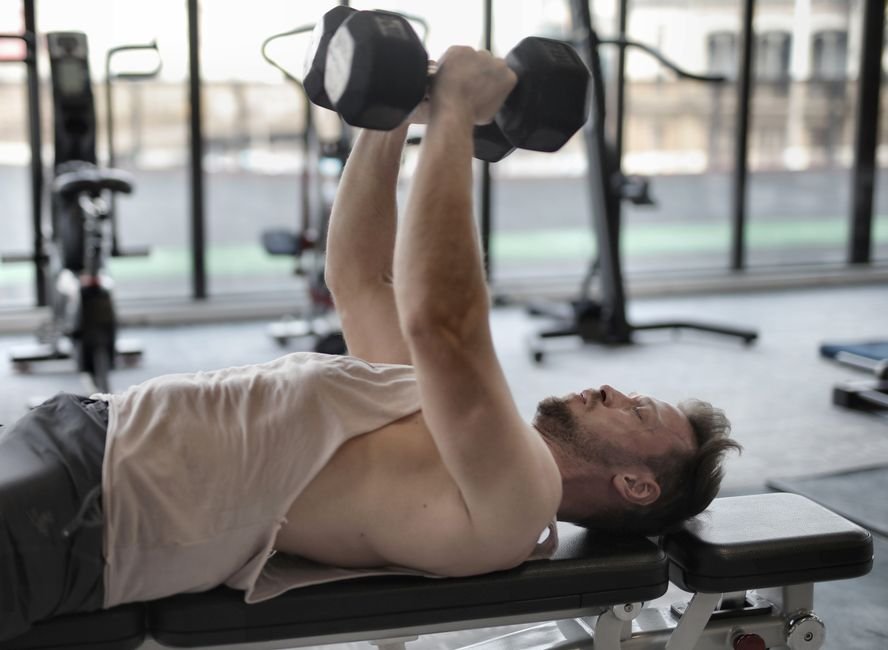
Sit on a bench with your back supported and hold a pair of dumbbells just outside your shoulders, your arms bent and palms facing your body. Getting there safely matters more than most people expect. A practical approach is to sit on the end of the bench with the dumbbells resting on your thighs, then use your knees to help kick them back as you lie down, one side at a time if that feels more controlled. Finish with your back flat on the pad, feet planted, and the weights positioned over your chest.
The press
Lower the dumbbells under control until your elbows are roughly level with your torso, or slightly below if your shoulders allow it comfortably. Keep your wrists stacked over your elbows instead of letting the weights drift toward your head. Press up and slightly inward without clanging the dumbbells together at the top. The lowering phase carries most of the control, so do not let gravity handle it. Cutting the descent short and bouncing the weights off your chest removes the hardest and most productive part of the rep.
Grip and elbow angles
You can get better chest activation in the dumbbell bench press by paying attention to grip and pressing technique. Elbow position is the simplest lever you have. If you want to emphasize your triceps more, tuck your elbows in. Leaving them flared out shifts more of the load toward the chest. A neutral grip with palms facing each other often feels kinder to the shoulder joint than a fully rotated grip. Test both, and keep whichever lets you press without pinching, clicking, or discomfort.
Why the Dumbbell Version Fits Lifters Over 40
Shoulders that have logged four or five decades of use rarely appreciate being locked into one bar path. Dumbbells let your hands rotate naturally, which means you can find the angle that works for your joint on any given day instead of forcing the position the bar dictates. That small freedom often decides whether pressing stays in your program at all.
There is also a built in honesty to the dumbbell press. If your left side is lagging, the weights tell you immediately. You cannot compensate with a stronger side, and you cannot muscle a rep through with momentum the way you can with a bar. For a lifter over 40 who wants to keep training for another twenty years, that feedback is worth more than a slightly bigger number on the bar.
Finally, the setup is more forgiving when you train alone. If a rep stalls, you can lower the dumbbells to your sides and set them down. With a barbell, a failed rep at a heavy load usually means you need a spotter or safety arms in place.
Programming Dumbbells and Bench Press Work
Training frequency and volume
Two pressing sessions per week is a workable starting point for most men over 40 returning to or rebuilding a training habit, with one session emphasizing the flat dumbbell bench press and the other using an incline angle or a lighter, higher rep approach. If you are already training four or more days per week, one dedicated chest press slot plus indirect work from shoulder pressing is usually enough to keep progress moving without beating up your shoulders.
Load, reps, and progression
Progressive overload is the engine behind any size or strength gain, and with dumbbells you have two dials to turn: reps and load. Dumbbells jump in fixed increments, so adding weight often means a bigger leap than you would take on a bar. Use reps as your fine adjustment. When you can hit the top of your rep range on every set with clean technique, move up to the next pair, even if your reps drop on the first session with the heavier weight. Build them back up from there.
Tempo and time under tension
Time under tension is a useful tool when your joints need a break from heavy loading. A controlled three second lowering phase and a brief pause at the bottom keeps the chest working hard without adding weight to the bar. This is often the smartest way for a lifter over 40 to keep progressing during a week when shoulders or elbows feel cranky.
Building a Full Workout with Dumbbells and a Bench
A bench and a set of dumbbells cover more than most people assume. Here is a straightforward push and pull session:
- Dumbbell bench press as your main press, done first while you are freshest.
- Incline dumbbell press with the bench set to a low angle to shift emphasis higher on the chest.
- One arm dumbbell row with one hand and knee supported on the bench, pulling the weight to your hip.
- Seated dumbbell shoulder press with your back supported against an upright bench.
- Dumbbell Romanian deadlift or a squat variation to finish with some lower body work.
Two to four sets per movement gives you a complete session that fits in under an hour, and you never have to wait for a rack.
Common Mistakes to Avoid
- Starting too heavy and losing the controlled path that makes the dumbbell version valuable in the first place.
- Cutting the range short so the weights never reach a full stretch at the bottom.
- Flaring the elbows hard and high, which crowds the shoulder joint under load.
- Skipping warm up sets with lighter dumbbells before your working weight.
- Ignoring the upper back and rowing work that keeps your shoulders balanced and stable.
- Bouncing out of the bottom position instead of pausing and reversing under control.
Frequently Asked Questions
Is the dumbbell bench press as good as the barbell version?
For building chest size and strength, both exercises work. It is perfectly fine to replace barbell bench press with dumbbell bench press, and your chest will grow bigger and stronger either way. The dumbbell version adds independent arm work, more freedom for your shoulders, and a safer bail out when you train alone. The barbell version lets you load heavier. Choose based on your joints and your goals.
Should I do both dumbbell and barbell bench press in the same week?
You can, and many lifters do. A common approach is one barbell session for heavier loading and one dumbbell session for controlled volume and shoulder friendly range of motion. If your recovery is limited or your shoulders are sensitive, pick one as your primary press and treat the other as an occasional variation rather than running both hard every week.
Can I get a good workout with just dumbbells and a bench?
Yes. A bench and a pair of dumbbells support pressing, rowing, shoulder pressing, and lower body work in one session. The main limitation is load. Once your dumbbells get too light for a given rep range, your progression has to come from more reps, slower tempo, added pauses, or single arm variations rather than piling on weight.
How do I know when to move up in weight?
Use reps as your signal. When you can complete the top of your target rep range on every working set with clean technique and controlled lowering, you have earned the next pair of dumbbells. Expect your reps to dip on the first session with the heavier weight. Build them back up before adding load again, and keep the form identical at every step.