
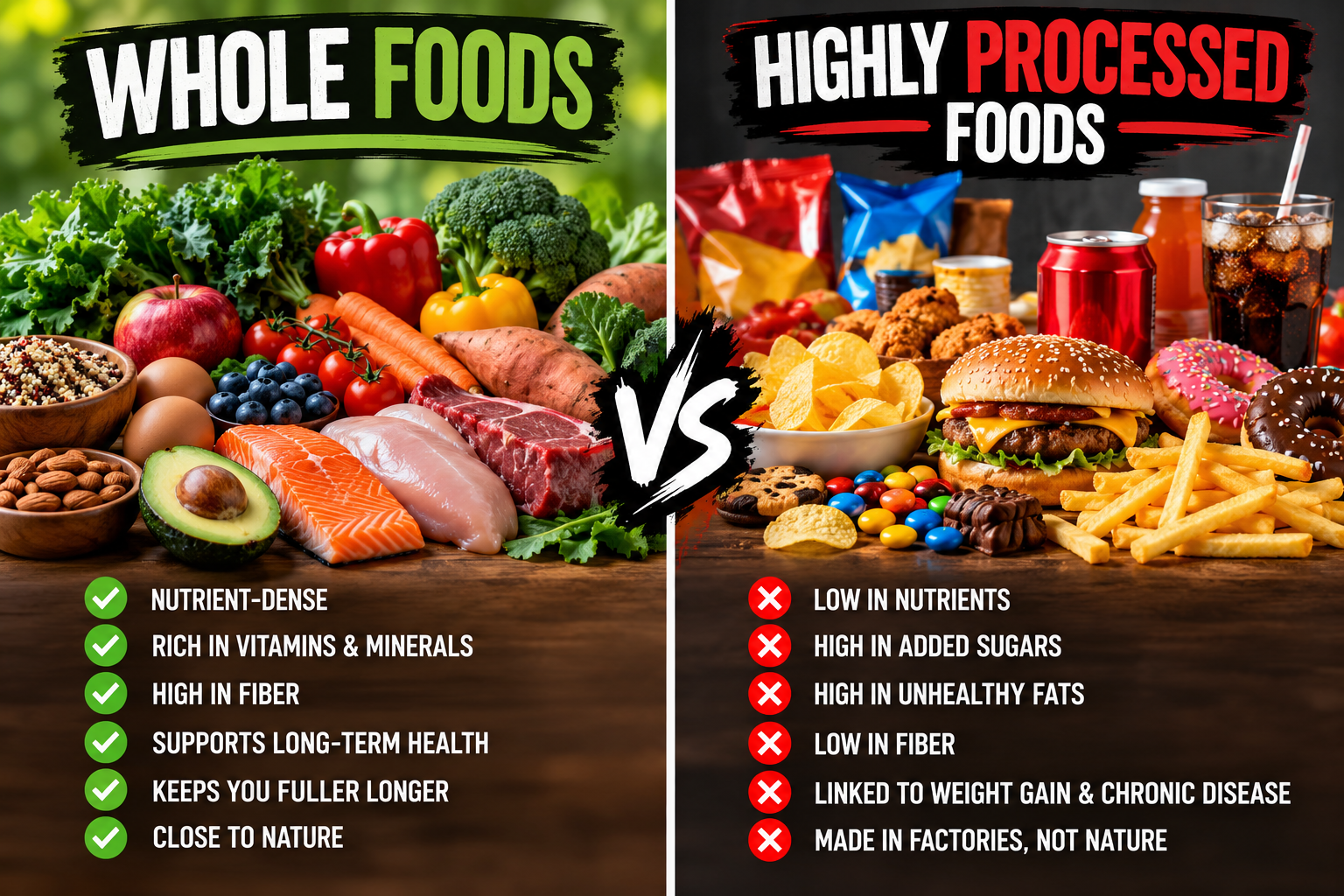
Processed foods often undermine your weight-loss efforts because ultra-processed items are calorie-dense, high in added sugars and low in fiber, which blunts satiety and promotes overeating. In contrast, whole foods boost satiety, provide vital nutrients and support steady blood sugar, making it easier for you to sustain a calorie deficit. This post gives clear, evidence-based guidance so you can choose foods that reliably support your goals.
Key Takeaways:
- Whole, minimally processed foods are more nutrient-dense and filling-higher in fiber, protein, and water-so they help reduce calorie intake and support weight loss.
- Ultra-processed foods are calorie-dense, often high in added sugars and refined fats, and are associated with overeating and weight gain.
- Weight loss depends on a sustained calorie deficit; prioritize whole foods, limit ultra-processed items, and use practical strategies like portion control and focusing on protein and fiber to stay consistent.
Understanding Whole Foods
When you choose whole foods, you pick items that are minimally processed and still resemble their original form – think apples, oats, lentils, salmon, spinach. These foods supply dense vitamins, minerals and fiber, helping you meet the recommended fiber targets of roughly 25-38 g/day. At the same time, some whole choices like nuts and avocado are energy-dense (~600 kcal/100 g), so portion control matters for weight-loss goals.
Definition and Characteristics
Whole foods are ingredients with little to no industrial alteration: whole grains retain bran and germ, legumes are simply cooked, and fresh produce isn’t stripped of fiber. You’ll find no added refined sugars, artificial additives, or trans fats in true whole foods. For example, a cup of cooked lentils gives about 18 g protein and 15 g fiber, illustrating how intact structure delivers both macronutrients and micronutrients together.
Nutritional Benefits
Whole foods deliver higher nutrient density per calorie: vegetables and fruits provide vitamins and phytonutrients, lean protein like salmon gives ~22-25 g protein per 100 g plus ~1.5-2 g omega‑3s, and whole grains contain B vitamins and fiber. You benefit from greater satiety through protein, fiber and water content, which helps reduce overall calorie intake without feeling deprived.
Digging deeper, whole-food fiber feeds your gut microbiome, producing short-chain fatty acids (like butyrate) that support metabolism and appetite regulation. Practical swaps work: choosing an apple (~95 kcal, fiber intact) over a 250 kcal cookie typically lowers energy intake and blunts blood‑sugar spikes. Beware that 100% fruit juice lacks fiber and can behave more like a sugary drink, undermining those benefits.
Exploring Processed Foods
Definition and Types
You encounter processed foods along a continuum from lightly altered items like frozen berries to highly engineered ready-meals; processing covers preservation, texture changes, and added flavorants. You should track ingredient lists to spot added sugars, sodium, and industrial additives that inflate calories without satiety. This framework helps you prioritize options that support weight loss while avoiding the most harmful formulations.
- Minimally processed – washed/cut produce, frozen fruit
- Culinary ingredients – oils, flours, sugar
- Processed foods – canned beans, smoked meats
- Ultra-processed – sodas, instant meals, flavored snacks
| Minimally processed | Frozen vegetables, plain yogurt – retain nutrients, low additives |
| Culinary ingredients | Vegetable oils, sugar, salt – used to prepare food, can add calories |
| Processed foods | Canned fish, whole-grain bread – some additives, often still nutritious |
| Ultra-processed | Sugary drinks, instant noodles – high in added sugars, sodium, low fiber |
| Ready-to-eat snacks | Chips, cookies – energy-dense, engineered for palatability |
Nutritional Impact
You get more calories, refined carbs, and added sugars from many ultra-processed items; cohort data show diets high in ultra-processed foods correlate with greater weight gain and metabolic risk. You can still use processed options wisely by choosing high-protein, high-fiber packaged foods and avoiding products with trans fats or long additive lists.
You should note the 2019 randomized metabolic ward study where participants ate ~500 kcal/day more on an ultra-processed diet and gained weight within two weeks, demonstrating how formulation drives overconsumption. Population studies (e.g., NutriNet-Santé cohorts) link every 10% increase in ultra-processed intake to higher obesity risk, so you benefit from targeting whole-food-based packaged items, prioritizing fiber and protein, and preparing more meals at home to control energy density and additives.
Weight Loss: The Science
You need a sustained energy deficit to lose weight, typically about a 500 kcal/day deficit to lose roughly 1 lb (0.45 kg) per week, but how you create that deficit matters: whole-food patterns naturally lower energy intake through higher satiety, while processed diets often drive overconsumption. A controlled inpatient trial found ultra‑processed diets increased ad libitum intake by about 500 kcal/day, producing measurable weight gain within two weeks, showing quality alters the energy equation.
Caloric Intake and Nutrient Density
Your calorie target should prioritize nutrient-dense choices: aim for ~1.2-1.6 g/kg protein to preserve lean mass and about 25-35 g fiber daily to slow gastric emptying and increase fullness. Foods low in energy density-vegetables, legumes, whole grains-let you meet volume needs with fewer calories; processed snacks tend to be energy‑dense and low in micronutrients, making adherence harder despite similar calorie counts.
Role of Food Quality in Weight Management
Food quality shifts hormones and behavior: highly processed items with added sugars, refined starches, and fats spike insulin and can blunt satiety signals, so you end up eating more. Protein’s thermic effect (~20-30% of its energy) and fiber’s fermentation by gut bacteria increase energy expenditure and fullness, giving whole foods a metabolic edge over ultra‑processed options.
Practical evidence backs this: when you replace processed breakfasts (sugary cereal, pastries) with whole-food swaps like steel‑cut oats plus Greek yogurt and berries, appetite and subsequent calorie intake decline. Processing also disrupts the food matrix, raising glycemic response and chewing time-simple changes that help you eat less without conscious restriction.
Whole Foods for Weight Loss
You should favor minimally processed items-lean protein, legumes, whole grains, vegetables, fruits, nuts-because they pack more fiber, micronutrients and volume per calorie. Protein and fiber-rich whole foods help you eat fewer calories without feeling deprived; for example, a cup of cooked lentils or 3-4 oz of salmon gives substantial protein and satiety while staying nutrient-dense. Choose whole foods to reduce calorie density and improve diet quality, and watch added oils, sauces or sweetened toppings that can erase those benefits.
Satiety and Metabolism
Protein has a high thermic effect-about 20-30% of its calories used for digestion-while carbs are ~5-10% and fat ~0-3%, so higher-protein whole-food meals raise your metabolic cost. Soluble fiber from oats, beans and apples slows gastric emptying and increases fullness; aim for ~20-30 g of protein and 8-15 g of fiber per meal pattern to maximize satiety. Combine protein + fiber (eggs + spinach, Greek yogurt + berries, lentils + veggies) for longer-lasting appetite control.
Easy Whole Food Recipes
Keep weight-loss cooking simple: batch-cook grains and beans, roast a tray of mixed vegetables and portion 3-4 oz proteins for ready meals. Try sheet-pan salmon with Brussels sprouts, a big pot of lentil chili, or overnight oats with Greek yogurt-many recipes take 10-30 minutes active time and store well for the week. You’ll save time and avoid impulse processed options when meals are prepped.
For quick numbers, overnight oats (½ cup rolled oats + 150 g Greek yogurt + 1 tbsp chia) yields roughly 15-20 g protein and 8-10 g fiber; two eggs + spinach + whole-grain slice gives ~18-20 g protein in under 10 minutes. Make a double batch of lentil chili (3-4 servings), freeze portions, and portion dressings separately to avoid added calories. These tactics help you stick to whole foods without extra effort.
Processed Foods and Weight Challenges
Ultra-processed products now provide about 57% of the average American’s daily calories, and controlled trials show measurable effects: a 2019 randomized study found participants on an ultra-processed diet consumed ~500 extra kcal/day and gained weight in two weeks. You may notice these items are engineered for rapid eating, high energy density and low satiety, which pushes you to snack more and exceed calorie targets-common culprits include flavored yogurts, packaged breads and fast-food combo meals.
Hidden Sugars and Unhealthy Fats
Many packaged items hide sugar under names like dextrose, maltodextrin or corn syrup; a single 12‑oz soda has about 39 g of sugar (~150 kcal), and flavored coffees or cereals can add 10-20 g per serving. You also face unhealthy fats-some baked goods still contain industrial trans fats or high saturated fat levels that raise calorie density and metabolic risk. Scan ingredient lists for sugar aliases and fat types to catch these hidden contributors.
Convenience vs. Health
Convenience foods save you time but often undermine weight goals: many frozen dinners exceed 700 mg sodium and deliver 400-800 calories per serving, while single-serve snacks are calorie-dense yet engineered for taste and shelf life. You might rely on them on busy days, which increases your exposure to high-salt, high-calorie formulations that reduce fullness and promote overeating.
When you need quick options, aim for meals under 600 kcal and 800 mg sodium, and prioritize products listing whole-food ingredients. Batch-cooking and freezing individual portions or choosing minimally processed conveniences like frozen vegetables, low-sodium canned beans and pre-cooked whole grains cuts prep time while improving satiety and nutrient density.
Making the Right Choice
You should prioritize whole foods for satiety and micronutrients and swap refined carbs and items high in added sugar. Multiple studies link diets heavy in ultra-processed foods to a 10-20% rise in daily calorie intake and poorer weight outcomes. Aim for plates with vegetables, lean protein, and whole grains-targeting about 70-80% whole-foods supports steady, sustainable loss. Thou tailor the ratio to your activity and preferences.
- whole foods
- processed foods
- added sugar
- protein
- calories
Balancing Whole and Processed Foods
When you balance choices, pick processed items that augment, not replace, nutrient-dense meals-canned beans, frozen vegetables, and plain Greek yogurt are practical. Aim for fiber at 25-30 g/day and protein around 20-30 g per meal to curb hunger; trials show higher protein can cut daily intake by ~200 kcal. Batch cook to limit impulse eating and schedule planned treats to avoid binges. Thou set clear limits so convenience doesn’t become your default.
- fiber
- protein
- batch cooking
- frozen vegetables
- Greek yogurt
Practical Tips for Healthy Eating
You can streamline choices by stocking staples-eggs, oats, canned tuna, nuts, and frozen veg-and reading labels for added sugar (aim low) and sodium (watch high-salt items). Use portion control tools like divided plates or a food scale and plan meals for 3-4 days to reduce reliance on takeout. Thou track weekly trends rather than daily fluctuations to assess progress.
- added sugar
- sodium
- portion control
- meal planning
- food scale
You can adopt a simple plate template-1/2 vegetables, 1/4 lean protein, 1/4 whole grain, plus a small healthy fat-to keep meals near 400-600 kcal and support a 300-500 kcal daily deficit for predictable loss of 0.5-1 lb/week; using a food scale for two weeks calibrates portions and shows where you over-serve. Try prepping sauces and mixes to cut decision fatigue and reduce ultra-processed snacking. Thou modify templates for social meals to remain consistent.
- plate template
- 400-600 kcal
- 300-500 kcal deficit
- 0.5-1 lb/week
- food scale
Final Words
Presently you should prioritize whole foods over heavily processed options for most weight-loss goals because they provide more satiety, fiber, and nutrients while minimizing added sugars and empty calories; however, practical portion control, consistent calorie balance, and sustainable habits determine outcomes, so use whole foods as your foundation while tailoring meals to your lifestyle and monitoring portions to achieve steady, maintainable weight loss.
FAQ
Q: What is the difference between whole foods and processed foods when it comes to weight loss?
A: Whole foods are foods that are minimally altered from their natural state-vegetables, fruits, whole grains, legumes, nuts, seeds, eggs, fish, and unprocessed meats. They tend to be higher in fiber, protein, water, vitamins, and minerals, which increases satiety and can reduce overall calorie intake. Processed foods range from minimally processed (e.g., frozen vegetables, canned beans) to ultra-processed items (e.g., sugary snacks, ready meals). Highly processed foods often contain added sugars, refined starches, unhealthy fats, and flavor enhancers that increase palatability and energy density, making it easier to consume excess calories. In practice, choosing nutrient-dense whole foods helps with fullness and sustained energy, but the degree of processing and portion control determine real-world impact on weight.
Q: Can processed foods be included in a weight-loss plan without sabotaging progress?
A: Yes. Processed foods can fit into a weight-loss plan if chosen and portioned carefully. Focus on minimally processed convenience items (frozen vegetables without sauces, plain canned fish, Greek yogurt, whole-grain wraps) and avoid ultra-processed products high in added sugars, sodium, and unhealthy fats. Track portions, balance meals with protein, fiber, and healthy fats to boost satiety, and factor packaged foods into your daily calorie and macronutrient targets. Using some processed items for convenience or adherence is often better for long-term success than insisting on perfect whole-food diets that are hard to sustain.
Q: How do I shop and eat smarter to favor weight loss without becoming overly restrictive?
A: Prioritize whole-food staples: vegetables, fruits, lean proteins, legumes, whole grains, and healthy fats. When buying packaged foods, read labels: shorter ingredient lists and recognizable ingredients are better, and watch added sugars, sodium, and trans fats. Use practical swaps-choose plain oatmeal instead of sweetened instant, whole fruit instead of fruit snacks, canned beans over processed meat, and frozen fruit for smoothies. Prepare meals ahead, use portion-controlled containers, and include protein and fiber at each meal to reduce cravings. Allow occasional indulgences in controlled portions to maintain adherence while keeping most meals centered on minimally processed, nutrient-dense choices.